
Dog Heart Disease Cough: What It Really Means & When To Act (Vet Verified)

If your dog has started coughing more than usual, it’s natural to feel concerned. While coughing is often linked to respiratory issues, it can also be a sign of something more serious—like heart disease. Understanding a cough related to a dog’s heart disease (dog heart disease cough) helps you recognize when a symptom is harmless and when it may require urgent attention. This guide will walk you through the causes, warning signs, and what to monitor at home.
What is a Dog’s Heart Disease Cough?
A dog’s heart disease cough occurs when an enlarged heart or fluid buildup affects the lungs and airways. Unlike typical respiratory coughs, it often appears alongside changes in breathing, energy, or activity. Recognizing patterns and monitoring symptoms such as resting respiratory rate can help detect worsening heart disease early and guide timely veterinary care.
Key Takeaways
- A dog’s heart disease cough signals underlying cardiac issues, not just respiratory illness
- Persistent coughing should never be ignored, especially in at-risk breeds
- Monitoring breathing and activity helps detect early changes
- A heart-related cough often appears with other subtle symptoms
- Early veterinary evaluation improves outcomes and comfort
Why Does Heart Disease Cause Coughing in Dogs?

When the heart becomes enlarged or weakened, it may:
- Press against the airways, triggering coughing
- Causes fluid buildup in or around the lungs
- Reduce oxygen circulation, leading to respiratory stress
Coughing in dogs with heart disease is not caused by infection but by physical and functional changes in the heart and lungs.
Over time, as heart disease progresses, these effects can intensify, making the cough more frequent.
Dog Heart Disease Cough vs Respiratory Infection Cough
It’s important to distinguish between a dog’s heart disease cough and a cough caused by respiratory infections.
Heart-related cough characteristics:
- Often dry and persistent
- May worsen at night or after lying down
- Commonly accompanied by fatigue or reduced activity
- Linked with increased resting respiratory rate
According to AVMA, an infectious cough is often accompanied by fever, nasal discharge, or sneezing, and is typically frequent and honking in nature. It usually improves with treatment and is commonly associated with a condition known as kennel cough.
Understanding the difference helps identify whether coughing with heart disease may be the underlying issue.
“I got the Maven sensor for my 14-year-old Chihuahua mix with heart and trachea issues. It gave me back peace of mind – I can track her RRR, BPM, drinking, and activity anytime and know instantly if something’s wrong. Highly recommend!”

★★★★★
Chiara De Luca
Titti
Other Signs of Heart Disease Dog Parents Should Watch For
A dog’s heart disease cough rarely appears alone. It is often part of a broader pattern of symptoms.
Other warning signs include:
- Increased resting respiratory rate
- Reduced activity or exercise intolerance
- Lethargy or weakness
- Loss of appetite
- Weight loss
- Restlessness or difficulty sleeping
“A persistent cough can be an early sign of worsening heart disease in dogs, especially when combined with changes in breathing rate or reduced activity.” — Sara Leitão, DVM, Veterinarian at Maven Pet.
When Coughing Becomes an Emergency

Not every dog’s heart disease cough requires emergency care, but some situations should never be ignored.
Seek immediate veterinary attention if you notice:
- Rapid or labored breathing
- Blue or pale gums
- Collapse or fainting
- Severe lethargy
- Persistent coughing that worsens suddenly
These signs may indicate advanced heart failure or fluid accumulation in the lungs. In cases of coughing in dogs with heart disease, timing can make a critical difference.
How Vets Diagnose Heart-Related Cough
Your veterinarian will use several tools to determine the cause.
Common diagnostic methods include:
- Physical examination (listening for heart murmurs or abnormal rhythms)
- Chest X-rays to detect heart enlargement or fluid
- Echocardiogram to evaluate heart structure and function
- Electrocardiogram (ECG) to assess heart rhythm
- Blood tests to check overall health
These tests help confirm whether coughing in dogs with heart disease is present and guide appropriate treatment.
How Maven Helps Monitor Breathing & Heart Changes
Using a dog heart rate tracker for continuous monitoring at home becomes more effective when lifestyle adjustments are implemented, and vet visits are planned adequately.

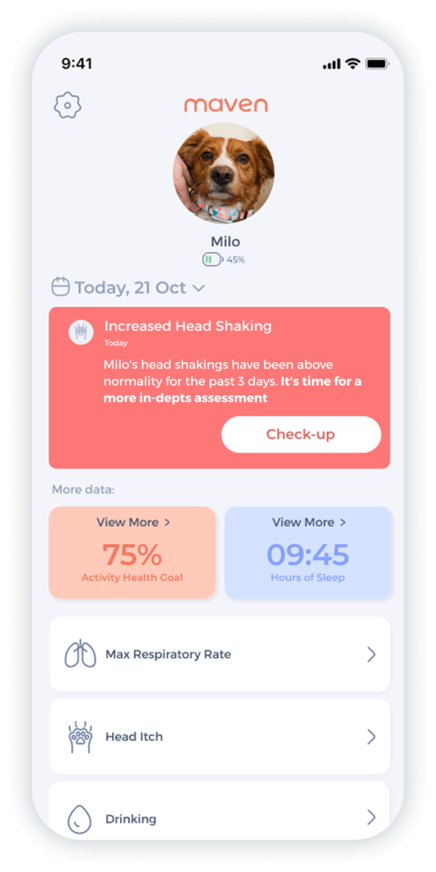
Monitor heart rate, respiratory rate, activity & rest, drinking, itch behavior.
The Maven pet health tracker gives you:
- Heart rate
- Activity levels
- Rest patterns
- Resting respiratory rate
- Scratching and water intake
Coughing episodes in dogs with heart disease are often linked to:
- Rising resting respiratory rate
- Reduced activity
- Increased rest
Maven’s pet health app establishes a personalized baseline and alerts you when meaningful changes occur, helping identify early warning signs and supporting timely veterinary care.
FAQ (Vet-Reviewed)
Yes, cough is a common symptom when heart function affects the lungs or airways.
A dog’s heart disease cough is typically dry, persistent, and may worsen at night or after rest.
If the cough is persistent, worsening, or combined with fatigue or breathing changes, it may indicate heart disease and should be evaluated.
Seek emergency care if your dog shows difficulty breathing, collapse, or sudden acute worsening of a cough.
Conclusion
Recognizing a dog’s heart disease cough early can make a meaningful difference in your dog’s health and comfort. While coughing may seem like a minor issue, it can signal important changes in heart function.
By paying attention to patterns and monitoring breathing and activity at home, you can act sooner and support better outcomes. When in doubt, always consult your veterinarian for guidance.
Maven Pet focuses on improving the quality of life of our pets with technology, using artificial intelligence (AI) to enable proactive pet care. By accurately collecting and monitoring pet data 24/7 and flagging any irregularities, Maven Pet empowers pet parents and veterinarians to stay ahead of potential health issues, ensuring the well-being and longevity of our beloved companions.